Clinical Operations leaders planning Phase II or Phase III CKD / DKD programs
Clinical Development leaders accountable for endpoint interpretability
QA / GCP / inspection-readiness stakeholders
Teams using central and local lab models
Teams planning global, chronic-care, retention-sensitive renal studies
Who this is for
This pack includes templates and controls intended to be adapted and adopted in protocol governance; study-specific thresholds must be confirmed before first participant screening.
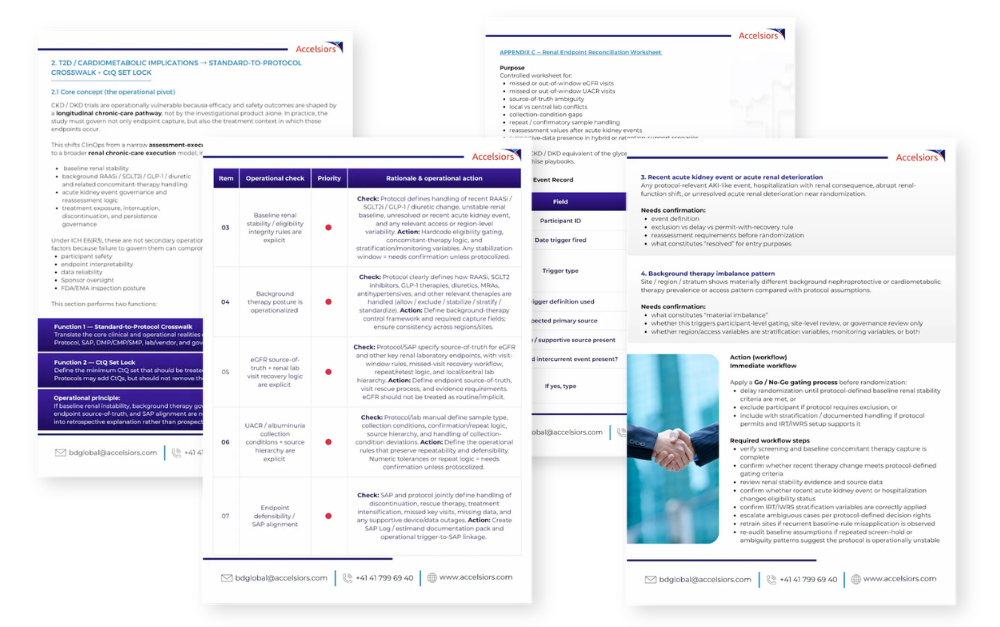
Explicit source-of-truth rules for eGFR, serum creatinine, and UACR
Central vs local lab data remain governed by a prespecified hierarchy
Repeat / reassessment values are classified under protocol-defined rules
Acute kidney event reassessment must not create silent endpoint substitution
Laboratory / vendor evidence must show:
chain-of-custody
transfer validation
reconciliation logic
incident / CAPA governance
Endpoint Defensibility: Operational Evidence That Supports the SAP
Protocol ↔ SAP ↔ DMP/CMP alignment before screening
Explicit handling of:
discontinuation
treatment interruption / restart
background therapy change
acute kidney events
protocol-driven reassessment
missed key eGFR visits
missed key UACR visits
temporary lab / hybrid execution gaps
Controlled SAP Log governance
Source-of-truth rules:
eGFR primary hierarchy
UACR primary hierarchy
supportive local data remain supportive unless explicitly endpoint-defining
Analysis-impacting events must leave an evidence trail, not just an email trail
This pack is educational and operational. Study-specific thresholds and analysis decisions must be prespecified in the final protocol, SAP, and study plans.